


Table of Contents
- Enhancing Patient Experience
- Reducing Wait Times
- Improving Data Accuracy
- Freeing Up Staff Resources
- Real-World Examples
- Addressing Privacy and Security Concerns
- Future of Self-Service Kiosks in Healthcare
- Conclusion
In today’s healthcare landscape, efficiency and convenience are nonnegotiable. Hospitals and clinics are increasingly turning to digital solutions, with self-service check-in kiosks now a crucial upgrade in many facilities. These systems are redefining the patient journey by making the check-in process smoother, faster, and more private. For anyone interested in improving their check-in process, exploring a kiosk for hospital check-in can be the first step toward a more streamlined experience. Patients benefit from quick self-registration and greater control over their data, while healthcare providers notice tangible improvements in workflow. These systems do not just add convenience, but actively contribute to higher patient satisfaction and a more effective use of staff resources.
Enhancing Patient Experience
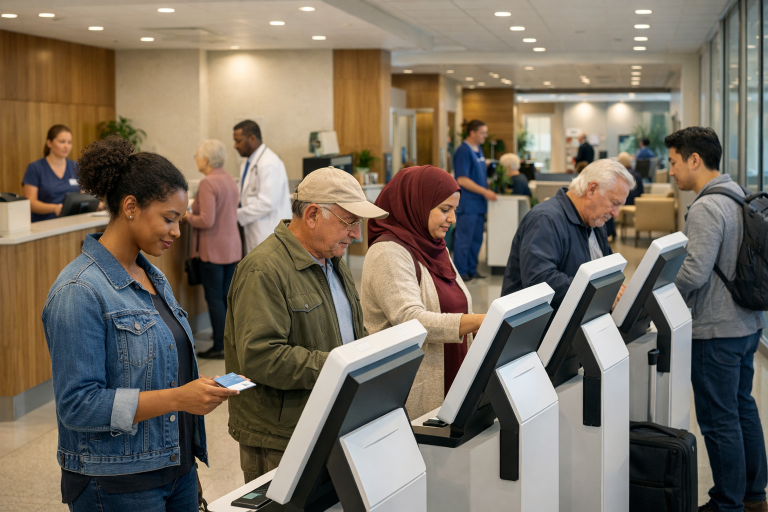
One of the standout advantages of self-service kiosks is their impact on the patient experience. These kiosks offer a user-friendly interface, allowing individuals to check in without waiting in line or engaging in lengthy conversations at the reception desk. Patients can easily update personal details, handle insurance verification, and submit co-payments. The privacy and autonomy that come with handling sensitive information directly are especially appreciated by those hesitant to discuss personal matters in public environments. By empowering patients to take a more active role in their healthcare journey, kiosks foster a sense of satisfaction and trust. This not only leads to more positive feelings about the visit but also encourages return visits and better overall health outcomes.
Reducing Wait Times
Healthcare facilities report significant reductions in wait times after implementing check-in kiosks. For instance, when the Cleveland Clinic deployed more than 150 kiosks across its locations, lobby wait times fell by nearly 40 percent. Patients gained back an average of 12.5 minutes per visit, reducing congestion and helping clinics see more patients without adding stress to the reception area. Such time savings improve the first impression and reduce anxiety before appointments. Additionally, having self-service kiosks at several entry points within a facility enables multiple check-ins at once, further streamlining patient flow. This distributed approach helps large medical centers, urgent care clinics, and specialty facilities alike optimize traffic, even during peak hours or flu season, when demand surges. Shorter wait times also pave the way for faster follow-up and ancillary services, such as lab sample collection, imaging, or after-visit scheduling, making the overall patient experience more cohesive and integrated.
Improving Data Accuracy
Manual data entry by staff, especially in a busy reception area, is prone to errors. Patients are best positioned to confirm and update their personal data and insurance information. Self-service kiosks enable direct input, reducing the chances of incorrect entries and improving the accuracy of electronic health records. The result is fewer billing problems, more reliable communication with insurance providers, and ultimately safer patient care. When patients review and submit their details, the risk of transcription mistakes is greatly minimized. Even more, kiosks may prompt users to double-check certain fields or upload up-to-date documentation, adding crucial checkpoints in the data collection process. This leads to cleaner records for clinicians and insurance staff, benefiting clinical workflows and helping prevent coverage denials due to incomplete or outdated data.
Freeing Up Staff Resources
Staff time is precious in any healthcare environment. Self-service kiosks take over repetitive administrative tasks such as check-in, form completion, and payment processing. This automation allows staff to dedicate more time to higher-value tasks such as assisting patients with special needs, answering questions, and focusing on care delivery rather than paperwork. Research highlights how technology can combat burnout and improve employee satisfaction in healthcare. As administrative workloads lighten, healthcare staff members can provide a warmer, more personal touch to patient interactions and improve the quality of service throughout the clinic or hospital. Nurses, aides, and front desk staff routinely report higher morale and more opportunities to use their skills when unburdened by repetitive tasks. Furthermore, hospitals can adapt their staffing models to better align with demand and patient care, ultimately reducing operational costs.
Real-World Examples
Hospitals and outpatient centers have reported measurable operational improvements after adopting self-service kiosks. At Novant Health Presbyterian Medical Center, newly installed kiosks dramatically reduced wait times and supported privacy by permitting patients to control the flow of their information as they checked in or updated their records. These systems also assisted with capturing insurance details by allowing patients to scan their identification and insurance cards directly at the kiosk. Another example is New York’s Mount Sinai Health System. The medical provider began using self-check-in kiosks as part of its digital transformation, yielding reduced registration bottlenecks and improved patient throughput. Patients note that being able to manage their visit details in private, at their own pace, reduces stress and errors from pressure or distractions at the front desk. In community clinics and smaller practices, kiosks have also proven to increase accessibility. They can be customized for pediatric visits, translated into multiple languages, and equipped with ADA-compliant hardware for those with mobility or vision challenges. The scalability of kiosk solutions means that facilities of every size can benefit from the same efficiencies once limited to larger systems.
Addressing Privacy and Security Concerns
With the adoption of digital solutions comes a heightened focus on privacy and data security. Healthcare organizations must comply with strict regulatory standards, particularly the Health Insurance Portability and Accountability Act (HIPAA), to maintain confidentiality. Today, self-service kiosks are equipped with encryption and secure authentication protocols to protect sensitive data. Regular software updates and the use of privacy screens further reduce the risk of unauthorized access. Advanced kiosk systems can also integrate with biometric authentication, multi-factor user verification, and audit trails to ensure that only authorized individuals have access to personal health information. Ongoing staff training and regular security audits provide an additional layer of safety, reinforcing patient confidence in using digital check-in options in an age of ever-present cybersecurity threats.
Future of Self-Service Kiosks in Healthcare
The evolution of self-service check-in kiosks is closely tied to advancements in artificial intelligence (AI) and machine learning. Future models are expected to offer features like personalized health guidance, integration with wearable devices and mobile apps, and multilingual support for more inclusive access. With these capabilities, kiosks may play a broader role in triaging patients and preemptively addressing health concerns before patients even meet their providers. As more data becomes available, kiosks will also support predictive analytics and patient engagement initiatives. They may help identify high-risk patients, prompt preventive screenings, or offer appointment reminders and educational materials tailored to individual needs. These forthcoming innovations position self-service kiosk technology as an integral part of connected care ecosystems, supporting better outcomes across the healthcare continuum.
Conclusion
Self-service check-in kiosks represent a transformational shift for healthcare delivery. By enabling faster, more accurate, and more secure check-in experiences, they create value for both patients and providers. As more facilities leverage these systems and manufacturers integrate new technologies, the patient check-in journey will become even more efficient and patient-focused. In sum, investing in self-service kiosks is not just about convenience, as it’s about building a healthcare infrastructure that supports both operational excellence and compassionate patient care. The adoption and evolution of kiosk solutions ensure that healthcare organizations remain agile and resilient, continually adapting to meet the needs of modern patients in a rapidly changing world.